Introduction to Highguard
Highguard has recently launched, stirring up a mix of excitement and skepticism in the gaming community. Despite the negative Steam reviews from players who barely scratched the surface, it’s worth examining this new free-to-play FPS through a fresh lens. With its unique gameplay mechanics and a business model that feels less exploitative than many of its peers, Highguard presents an intriguing option for FPS enthusiasts.
Unique Gameplay Mechanics
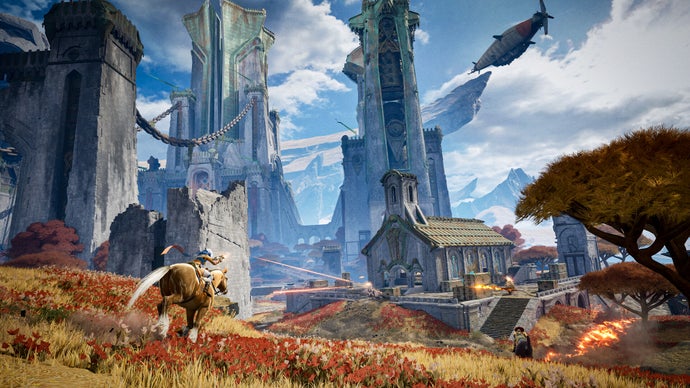
Developed by Wildlight Entertainment, a studio mainly comprised of former Respawn developers, Highguard introduces a novel format dubbed a “raid shooter.” This term aptly describes the game’s core objective: teams must destroy the opposing base to secure victory. Matches unfold on expansive maps with only six players—two teams of three—creating a dynamic that feels both intimate and competitive.
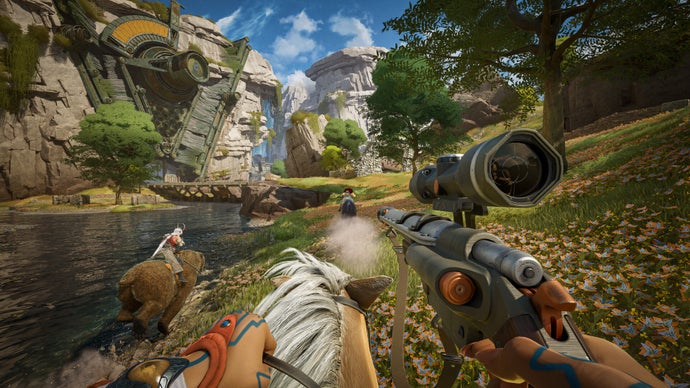
The initial phase of each match resembles an accelerated battle royale, where players rush to gather weapons and armor. However, the real action ignites when the Swordbreaker—a pivotal item—spawns in the center of the map. The first team to seize this sword and transport it to the enemy base triggers a siege, shifting the match’s focus dramatically.
The Siege Phase
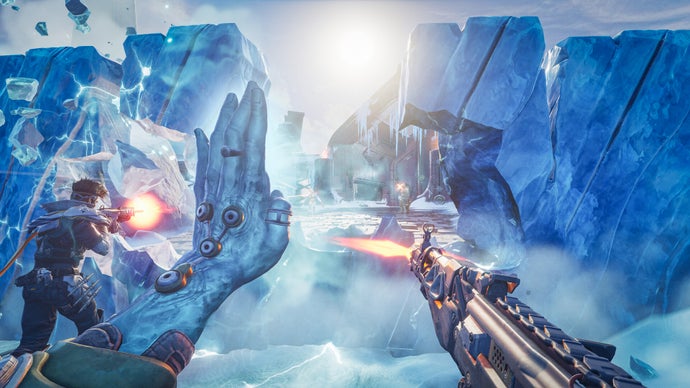
Once the siege begins, gameplay slows considerably. Players must adapt to new strategies as mounts are stowed and defenders take strategic positions. The siege mechanics draw parallels to Rainbow Six Siege, featuring destructible environments that add layers of complexity. Teams must either destroy two generators or a single core to claim victory. This intricate setup creates a tug-of-war dynamic that can be thrilling, especially as players learn to navigate the chaos.
While the mechanics may seem convoluted at first, they eventually click into place. After several matches, players can find their footing, discover preferred heroes, and engage in exhilarating gameplay. The unique blend of strategy and action is commendable, showcasing Wildlight’s ambition to innovate within the FPS genre.
Art Style and Player Experience
Despite its engaging mechanics, Highguard’s art style—described as “arcane punk”—may not resonate with everyone. Some players might find the aesthetic unappealing, which can detract from the overall experience. Additionally, the gameplay can feel overwhelming, particularly during the siege phase, where chaos reigns, and clarity is often lost.
Moreover, the game’s pacing and design may not align with current player preferences. Many gamers are gravitating toward more casual, social shooters, as evidenced by the success of titles like Battlefield 6 and Arc Raiders. This shift suggests that Highguard may struggle to capture a dedicated audience, especially among those seeking a less intense gaming experience.
A Mixed Bag
Highguard offers a fresh take on the FPS genre with its unique mechanics and engaging gameplay. However, its timing and artistic choices may hinder its appeal in a landscape increasingly favoring more casual shooters. While it has potential, it remains to be seen whether Highguard can carve out a lasting niche in the gaming community. As I continue to explore its depths for a full review, I remain cautiously optimistic yet aware of its limitations.