
From Hype to Backlash To Long-Term Rebuilding
Estimated reading time: 8 minutes
Cyberpunk 2077 redemption is no longer just a meme, a talking point, or a defensive slogan traded in comment threads. It is a real question that sits at the center of one of the most turbulent modern launches in mainstream gaming. CD Projekt Red’s open-world action RPG arrived in December 2020 after years of anticipation, and it landed with a thud that echoed beyond its own fanbase. Since then, the studio has pushed patches, updates, and major additions, including the Phantom Liberty expansion. The result is a game that many players now describe very differently than they did at launch. Yet the legacy remains complicated, and so does the idea of “redemption” itself.
Cyberpunk 2077 is developed by CD Projekt Red and set in Night City, a dystopian future metropolis that anchors the game’s identity. It is also based on the tabletop role-playing game Cyberpunk 2020, which helps explain its obsession with gangs, corporations, and body modification, as well as its emphasis on choices and character builds. Those pillars were part of the appeal from the moment the game was announced back in 2012. The long gap between announcement and release amplified expectations. Trailers promised a dense, reactive city and a cinematic, choice-driven story. By the time the game launched, it had become a symbol of how big-budget development sells not only a product, but a dream.

When that dream collided with reality, the crash was public and severe. Cyberpunk 2077’s launch was marred by bugs and performance issues, with particularly harsh problems on last-generation consoles. The backlash was not limited to nitpicks. It became a consumer trust issue. The game was temporarily removed from the PlayStation Store. CD Projekt Red faced a class-action lawsuit. In a media environment that increasingly treats game launches like cultural events, the story expanded into a cautionary tale about hype, deadlines, and accountability.
That is the context in which any discussion of Cyberpunk 2077 today has to start. A redemption story is only as strong as the failure that precedes it. And for Cyberpunk 2077, the failure was not a small stumble. It was a widely felt breach between what was marketed and what many people could actually play.

Cyberpunk 2077 Redemption and What Players Mean By It
The phrase “Cyberpunk 2077 redemption” is often used as if it had a single clear definition. In practice, it can mean several different things, depending on who is speaking.
For some players, redemption is primarily technical. Does the game run well now, especially on the platforms where it struggled? Are the worst bugs and performance problems addressed? For others, redemption is more holistic. It includes whether the game’s systems feel coherent, whether the open world feels alive, and whether the final product matches the spirit of what was promised.
There is also a moral component, even when people avoid that language. Many fans are not only evaluating the state of the game. They are judging CD Projekt Red’s response to the crisis. Did the studio own up to its mistakes? Did it support the game post-launch in a way that respects the people who paid full price? In an industry that increasingly normalizes post-release patching, Cyberpunk 2077 became a stress test for how far that model can be pushed before it breaks.
That is why the conversation remains divided. Some players returned years later and found a much smoother experience than in 2020. Others decided the launch was the point. They do not want to reward a business model in which finishing touches come after the sale, even if the final result ultimately improves.
A Launch That Reshaped The Game’s Reputation
Cyberpunk 2077 is not the first major release to struggle. But the scale of its issues, combined with its profile, made it unusually symbolic. The game’s launch was framed not as a rocky start, but as a cautionary moment for the whole medium.
Part of that is because CD Projekt Red entered the launch with goodwill among many core players. When a studio known for consumer-friendly messaging becomes associated with a high-profile mess, the emotional response can be sharper. People Do Not Just Criticize The Bugs. They Feel Disappointed In What The Studio Represented.
The launch fallout also reinforced a modern reality: platform differences matter, and the public notices. A game can be broadly praised on one set of hardware and widely condemned on another. For Cyberpunk 2077, the last-generation console performance issues became central to the controversy. The temporary removal from the PlayStation Store added an official stamp to what players were already saying: something had gone wrong in a way that could not be waved away.
This matters for the redemption question because reputation is not patched as easily as code. Even after fixes, many people still remember how it felt to watch the launch unfold. The stigma lingers, especially for those who never returned.
FAQ:
Q: What is Cyberpunk 2077?
A: Cyberpunk 2077 is an action role-playing video game developed by CD Projekt Red, set in the fictional dystopian city of Night City.
Q: Why was Cyberpunk 2077 controversial at launch?
A: When it was released in December 2020, it faced heavy criticism for bugs and performance issues, particularly on last-generation consoles. It was temporarily removed from the PlayStation Store, and CD Projekt Red faced a class-action lawsuit.
Q: What is Phantom Liberty?
A: Phantom Liberty is a major expansion for Cyberpunk 2077 that arrived during the game’s post-launch life and became a key reference point in discussions about the game’s comeback.
Q: Is Cyberpunk 2077 based on something?
A: Yes. Cyberpunk 2077 is based on the tabletop role-playing game Cyberpunk 2020.
CD Projekt Red’s Long Patchwork Era
After release, CD Projekt Red committed to addressing Cyberpunk 2077’s problems through multiple patches and updates. The general arc is straightforward, even if the details blur with time: an extended period of repairs and improvements in 2021 and 2022 meant to stabilize performance and reduce the most visible bugs.
This kind of sustained post-launch work has become common in the industry, but Cyberpunk 2077 made it impossible to ignore. Every update became part of the narrative. Each patch was judged not only by what it changed, but by what it symbolized. Was it proof that the studio was doing right by players? Or was it proof that the game shipped before it was ready?
It is easy to talk about patches as a checklist. But for a large role-playing game, fixes often mean changing the feel of the experience. Performance improvements affect pacing. Bug fixes can alter how quests flow, how crowded streets feel, and how reliably the world responds. Even when the core story remains the same, the moment-to-moment texture can change a lot.
There is also a psychological shift for returning players. When someone picks up the game after months or years, they do not experience the incremental improvements. They experience a before-and-after. That can make the comeback feel more dramatic. It can also make the original disappointment feel even sharper.
Phantom Liberty and The Power of A Second Impression
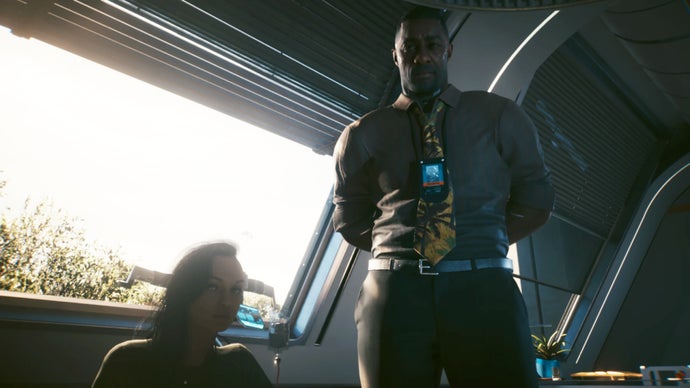
If patches are the steady work of recovery, expansions are the headline moments. Cyberpunk 2077’s Phantom Liberty expansion became a major marker in the game’s post-launch era. For many players, it represented something more than added content. It suggested the studio was still invested in the world of Night City and was willing to build on it substantially.
Expansions can function as reintroductions. They give lapsed players a reason to return and provide new talking points that are not tied to launch-day memories. They also invite new audiences who may have avoided the game in 2020 but feel more comfortable jumping in later.
That dynamic matters because redemption in popular culture often depends on a clean narrative beat. “It’s fixed now” is rarely enough on its own. People want an event that signals a new chapter. Phantom Liberty, by virtue of being a named expansion with its own identity, plays that role in the broader conversation.
Still, an expansion does not erase history. It can improve the present, but the question remains: should the present be enough to outweigh the past? Different players answer that differently, and that divide has become part of Cyberpunk 2077’s identity.
Night City, Music Culture, and The Game’s Wider Reach
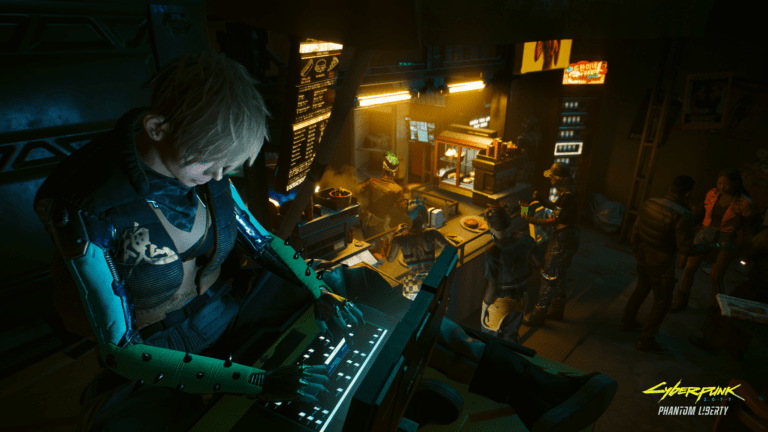
For gamers and music fans, Cyberpunk 2077’s impact is not only about performance charts and patch notes. The game’s world-building is designed to feel like a full cultural ecosystem. Night City is not just a map. It is an idea of a place, built around style, noise, and social pressure.
That matters because the cyberpunk genre has always been about aesthetics and atmosphere as much as plot. Even when people criticize the game’s launch, many still reference its ambition and detail. The scope was a core selling point, and it remains central to the game’s continued appeal.
The genre also thrives on the feeling of a soundtrack-driven city, where identity is expressed through fashion, technology, and attitude. Cyberpunk stories often treat music as a social signal and a survival tool, not background flavor. In that sense, a cyberpunk game with strong world-building naturally becomes a crossover topic for audiences who care about sound and scene as much as they do about mechanics.
That crossover also helps explain why the redemption debate stays alive. People are not only arguing over whether a product works. They are arguing over whether a certain kind of big, stylish, high-concept game can still exist under modern production pressures. Cyberpunk 2077 became a proxy for that larger anxiety.
What the Industry Learned, and What It Pretended Not To
Cyberpunk 2077’s launch was widely discussed as a lesson in transparency and timing. But the industry’s relationship with lessons is messy. Big releases still arrive with issues. Roadmaps still promise future improvements. Marketing still leans into ambition.
What Cyberpunk 2077 did change was the visibility of consequences. The temporary PlayStation Store removal was a striking moment. It showed that platform holders can intervene when consumer trust breaks down. The class-action lawsuit also underscored that public backlash is not only a PR problem. It can become a legal and financial one.
For players, the lesson was more personal. Many became more skeptical of pre-release hype and more cautious about day-one purchases. For developers, the episode highlighted the risks of shipping a complex open-world RPG before it is stable across target platforms.
At the same time, Cyberpunk 2077’s continued life complicates the simple warning. The game did not disappear. It was supported, updated, and expanded. That outcome can be read two ways. It can be proof that studios can make things right. Or it can be a sign that launching early is survivable if the brand is big enough.
So, Has CD Projekt Red Redeemed Itself?
The honest answer depends on what you think redemption requires.
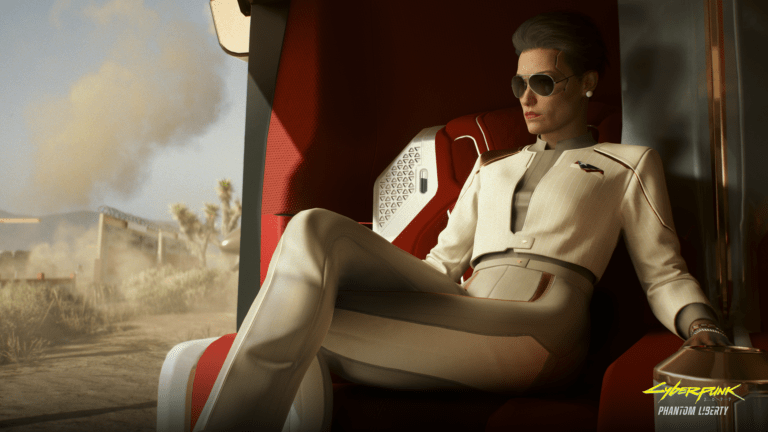
If redemption means “the game is meaningfully improved from its December 2020 state,” that is consistent with the studio’s years of patches and the existence of major post-launch content like Phantom Liberty. It also aligns with the basic reality that Cyberpunk 2077 returned to the PlayStation Store after its temporary removal.
If redemption means “the launch should be forgiven,” that is a different standard. Many players will never accept that framing, because their grievance is not just technical. It is about being sold a vision that did not match what shipped on certain platforms, and about a culture that treats post-release fixes as an acceptable substitute for readiness.
If redemption means “CD Projekt Red has restored trust,” that may be the hardest metric of all. Trust is not a patch. It is an accumulation of consistent choices over time. Cyberpunk 2077 can be improved. The studio can demonstrate effort. But the memory of the launch will remain part of the company’s story for years, perhaps permanently.
What is clear is that Cyberpunk 2077 now exists in two forms in the public imagination. There is the 2020 launch version, defined by controversy. And there is the later, supported version, shaped by fixes and expansions. Players who have only experienced one of those versions often talk past each other. They are debating two different games under one name.
That split may be Cyberpunk 2077’s most lasting legacy. It is not only an action RPG set in Night City. It is a live example of how modern releases evolve, and how audiences decide what they will and will not forgive.
Near the end of this long conversation, the phrase returns with more weight than it had at the start: Cyberpunk 2077 redemption. It is not a verdict that can be stamped once and never revisited. It is a continuing argument about responsibility, repair, and what players are asked to accept as normal.