
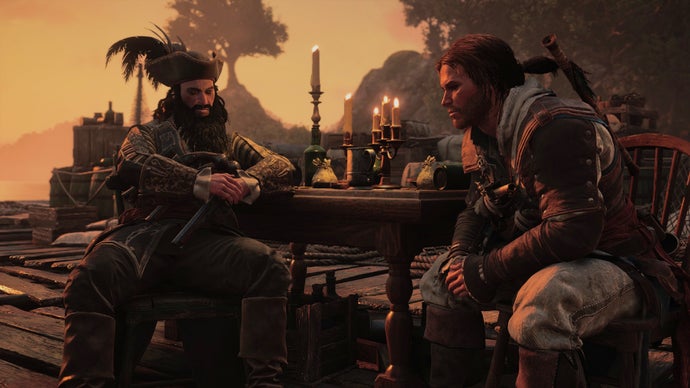
The Assassin’s Creed Identity Crisis: Why a Pirate Game Still Matters
Black Flag Resynced arrives with a familiar promise and an unusually heavy burden. It isn’t just a fresh coat of paint on a fan favorite. It’s framed as a reimagining of Assassin’s Creed IV: Black Flag, the 2013 entry that pushed the franchise deeper into open-world sprawl and turned naval travel into a core fantasy. The original was celebrated for its Caribbean setting, its seafaring combat, and its pirate-forward tone, all anchored by Edward Kenway, a privateer-turned-pirate who is drawn into the long-running conflict between Assassins and Templars.
For gamers, that pitch still hits. The Golden Age of Piracy remains a durable pop-cultural playground, and Black Flag’s formula is one many players remember with rare fondness. Yet the context around the franchise has changed. Assassin’s Creed began in 2007 with a distinct identity: stealth, social blending, and targeted assassinations inside dense historical cities, tied to a modern-day storyline. Over time, the series stretched into broader action-RPG systems and larger worlds. A project like Black Flag Resynced, which explicitly seeks to modernize gameplay mechanics while retaining the “essence of the original,” inevitably becomes a referendum on that shift.
This is why Black Flag Resynced matters beyond simple nostalgia. It asks an uncomfortable question that every long-running series eventually faces: when you update the mechanics that define a classic, what exactly are you preserving?
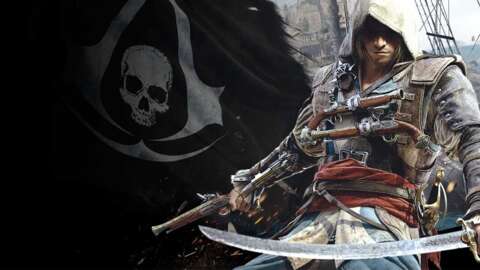
A Pirate Game That Changed What Assassin’s Creed Could Be
Assassin’s Creed IV: Black Flag did not appear in a vacuum. By 2013, the franchise was already established as a major name in action-adventure games, built on historical tourism and a signature loop of exploration, climbing, and carefully planned kills. Black Flag kept the scaffolding—parkour, stealth, and the shadow war between Assassins and Templars—but it pushed the player’s imagination outward, past rooftops and into open water.
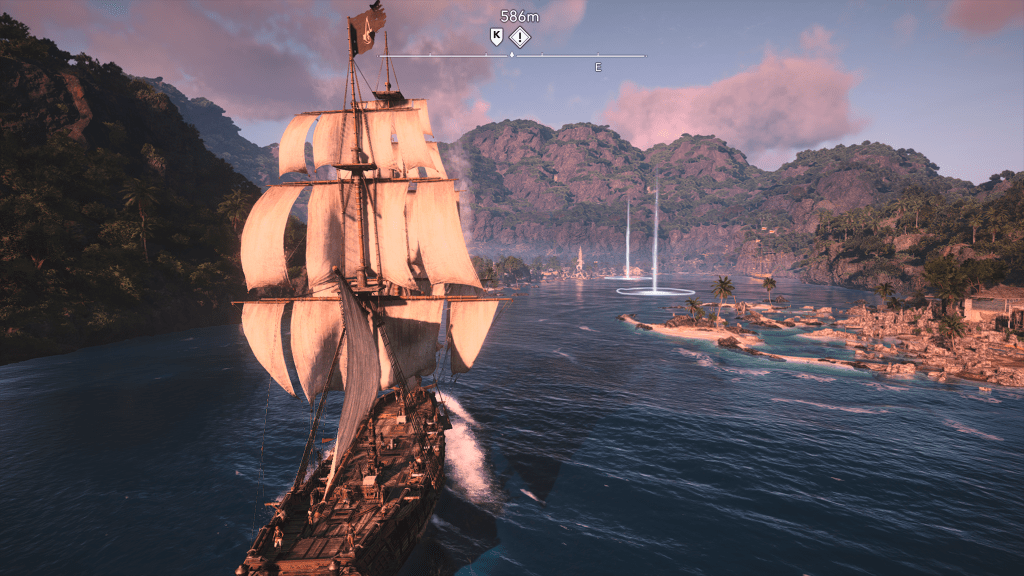
Its calling card was freedom. The Caribbean setting let players treat the sea as a highway, a battleground, and a stage for emergent stories. Naval combat and exploration were central to the appeal. The game became known for open-world discovery and ship-to-ship engagements, and it delivered a pirate fantasy that felt unusually tactile for the time.
Edward Kenway, the protagonist, made that fantasy feel messy rather than heroic. He is both pirate and Assassin, and the tension between those identities carries the story. That moral complexity—profit and survival on one side, ideology and loyalty on the other—fit the series’ broader theme of individuals caught between institutions. In Black Flag, that theme plays out not only in cutscenes, but also in the player’s day-to-day behavior. You are a hunter, a scavenger, and an opportunist. You are also the person who can choose to act with purpose.
This blend of swashbuckling momentum and Assassin’s Creed lore helped Black Flag become a turning point. It showed the franchise could succeed even when the “Assassin” fantasy shared the spotlight with something bigger.
What “Resynced” Implies: Modernization Without Erasure
The brief around Black Flag Resynced is clear about its intent. It is a reimagining that aims to modernize gameplay mechanics while retaining the essence of the original. That is an attractive line, but it also contains the fundamental design problem. Modernization often means smoothing edges, streamlining friction, and aligning older systems with contemporary expectations. Yet those edges are sometimes the very thing that gave an older game its character.
In the case of Black Flag, the “essence” many players recall is tied to a particular rhythm. You sail, you scout, you strike, and you vanish. You drift into a new port with your ship’s upgrades on your mind and a map full of possibilities ahead of you. You alternate between broad, sunny openness and tight moments of danger.
Updating graphics is the easy part to imagine. The context also points to refined gameplay mechanics and an enhanced overall player experience. But mechanical updates are rarely neutral. If naval combat is “improved,” what does that mean for pacing and challenge? If exploration is “enhanced,” does it preserve the sense of being a small actor on a huge sea, or does it turn travel into a checklist? Those questions don’t have answers here, and they shouldn’t be filled with guesses. Still, the questions themselves shape how players will approach the reimagining.
A reimagining also tends to invite comparison, not only to the 2013 original but to whatever Assassin’s Creed has become since then. That comparison can be unfair, because each era reflects different design priorities. Yet it is also unavoidable.
The Series’ Shift From “Classic” to “Modern”
Assassin’s Creed started in 2007 with a recognizable spine. Historical cities were built as stealth playgrounds. The modern-day storyline was not a footnote; it was part of the promise. The idea was ambitious: a historical conspiracy thriller filtered through science fiction, where the past and present echoed each other.
Over the years, the franchise expanded. Worlds grew. Systems multiplied. Combat and progression took on more of the spotlight. That broader approach brought new fans and extended the series’ lifespan, but it also changed what “Assassin’s Creed” signaled to players. For longtime fans, the question is not whether the new approach is good. It is whether it is still the same series.
Black Flag already contained that tension in 2013. It offered classic Assassin’s Creed elements, but it also let the pirate fantasy dominate the moment-to-moment play. That is why it can be read as both a culmination of the early formula and a door into the later one. You could interpret it as the last time the series’ stealth roots and its open-world ambitions felt balanced. Or you could see it as the first time the franchise realized it could thrive when it stopped pretending stealth was the only point.
In that sense, Black Flag Resynced is not merely revisiting a popular entry. It is revisiting a crossroads.
Edward Kenway and the Moral Mess of the Caribbean
For a feature audience of gamers, it is worth naming what makes Edward Kenway endure as a lead. He is not introduced as a pure idealist, and that matters. His story fits the Golden Age of Piracy setting because it treats piracy as both myth and reality. It is adventure, but it is also extraction. It is freedom, but it is also violence and opportunism.
The Assassin–Templar conflict in Black Flag adds another layer. Both sides claim to offer order of a kind. Both sides demand sacrifice. Edward’s navigation of that conflict invites players to think about the cost of belonging, and the cost of staying unaffiliated. That moral complexity is one of the themes the context brief highlights, and it is a big reason a reimagining has to be careful about tone. If the pirate fantasy becomes too clean, it risks losing the story’s friction. If it becomes too cynical, it risks flattening the romance that made exploration feel intoxicating.
The best-case scenario for any reimagining is that it keeps the contradictions intact. That means preserving the sense that you are not simply role-playing a pirate hero. You are role-playing a person making choices inside a historical moment that does not care about your personal narrative.
Why the Golden Age of Piracy Keeps Returning
Piracy in popular media has a built-in advantage. It offers clear iconography—ships, cannons, flags, ports, and storms. It also offers a fantasy of self-determination that can be framed as liberation or lawlessness depending on the story. That flexibility makes piracy useful for games, because games thrive on player agency.
Black Flag tapped into that energy with an open world designed around movement and discovery. Even without listing specifics beyond what is confirmed—naval combat, open-world exploration, historical context—those pillars explain why the setting works. The sea makes travel meaningful. Ports create contrasts in scale and culture. Combat creates spikes of adrenaline that punctuate quieter stretches.
It is also a setting that can support both spectacle and introspection. A ship battle is immediate and loud. Sailing in silence can feel meditative. For many players, that alternation becomes the memory. It is not just the missions. It is the sensation of being on the way to something.
Anticipation, Especially Across Asian Markets
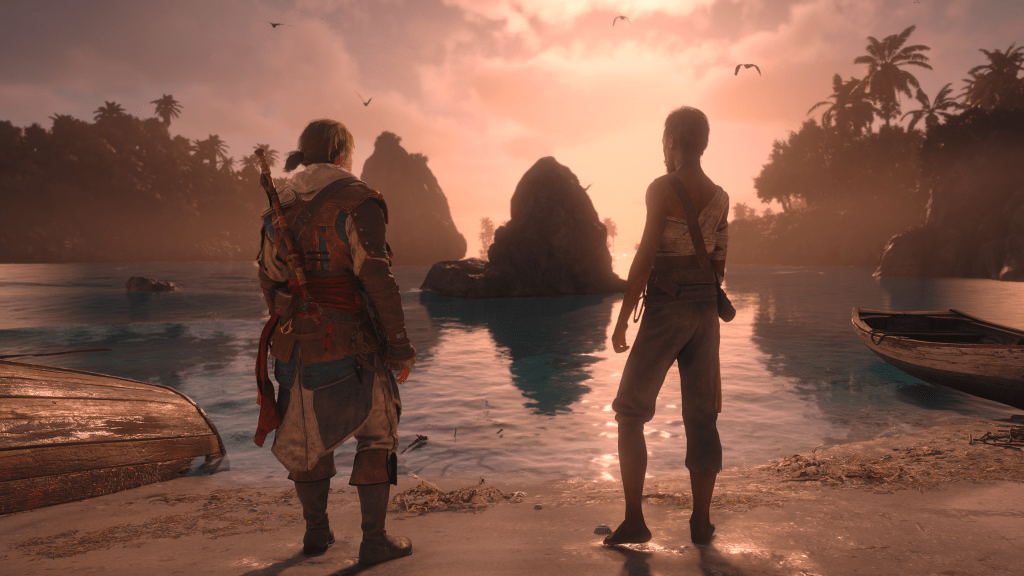
For gamers in the broader Asian market, where the franchise has a substantial following. It complicates the way “legacy” is discussed. A game can be a classic in one region and a generational touchstone in another. It can be someone’s first Assassin’s Creed, not their fourth.
A reimagining like Black Flag Resynced therefore has to satisfy several types of players at once. Some want a preserved museum piece with better visuals. Others want a modern action-adventure that uses the old story as a foundation. And many simply want the pirate loop—exploration and naval combat—delivered with contemporary polish.
Anticipation also raises the stakes for any disagreement about what is “authentic.” When a franchise has run since 2007, there is no single consensus audience. There are overlapping communities with different nostalgia points. Black Flag Resynced is positioned to bring those groups into the same conversation again, for better or worse.
How to Approach a Reimagining as a Player
For gamers deciding how to approach Black Flag Resynced, the most honest stance may be curiosity rather than certainty. Black Flag’s legacy is real. It is remembered for its open world, its naval combat, and its pirate setting in the early 18th century Caribbean. It is also remembered for how it made the Assassin–Templar conflict feel like one more storm system around a very human protagonist.
If Black Flag Resynced succeeds, it will not be because it perfectly replicates every beat of 2013. It will be because it preserves the emotional loop that made exploration feel alive. It will be because modernization serves clarity rather than flattening personality. It will be because Edward Kenway’s moral complexity still lands, and the world still feels like it has edges.
The truth is that “updating” a classic is always an argument with time. Players have changed. Design language has changed. Expectations around movement, responsiveness, and feedback have shifted. A reimagining can either fight those expectations or meet them halfway. Either choice carries risk.
Yet the very existence of Black Flag Resynced shows how durable the pirate entry remains within the franchise’s history. It is still the one that gamers point to when they talk about the series at its most carefree and most expansive. It is also the one that hints, in retrospect, at how the series would evolve.
Near the end of that conversation, the name itself becomes the anchor. Black Flag Resynced is not just a return to sea. It is a return to the moment Assassin’s Creed proved it could be bigger than its original silhouette, and still feel like itself.