
Black Flag Resynced Sets A New Bar
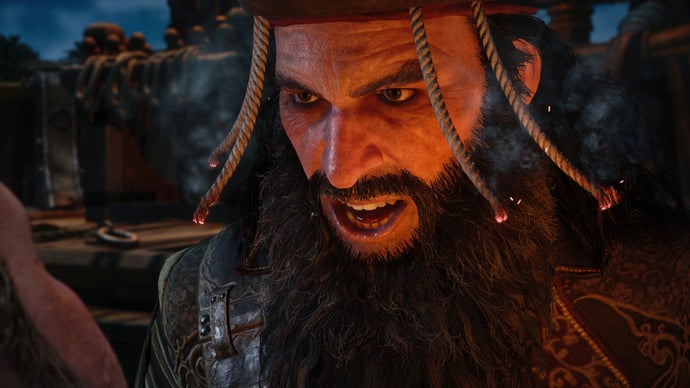
Black Flag Resynced has done something Ubisoft’s long-running Assassin’s Creed series does not always manage at launch: it has generated a clear, quantifiable burst of momentum that is difficult to argue with. According to reporting by Eurogamer, the reimagined release sold more than 2 million copies on its first day. PC Gamer also reports that it reached the highest concurrent player count ever recorded for an Assassin’s Creed title on Steam. Taken together, those two numbers describe more than a successful release window. They suggest a surge of attention that is both commercial and communal, with players showing up at the same time and in the same place to see what a modernized version of a 2013 favorite feels like in 2020s gaming culture.
That matters because Assassin’s Creed is no longer just a series of historical action-adventures. It is a franchise with many eras, many expectations, and many kinds of players. A modern launch does not only compete with other big games. It competes with the audience’s memory of what the series used to be and with the reality of what it is now. In that sense, the early success of Black Flag Resynced reads like a rare moment of alignment. People wanted this particular kind of Assassin’s Creed again, and enough of them wanted it at once to set a Steam record.
Black Flag Resynced and the Power of a Shared Return
The original 2013 game, Assassin’s Creed IV: Black Flag, occupies a specific place in the series’ mythology. It is remembered for its early 18th-century setting during the Golden Age of Piracy and for centering on Edward Kenway, a pirate who becomes entangled with the Assassin Brotherhood. It is also widely associated with a style of adventure that feels distinct within the franchise: ocean travel, naval combat, and an open world built around movement and discovery.
Black Flag Resynced is positioned as a reimagined version that aims to modernize the gameplay experience while retaining the essence of the original. Even without diving into technical changes, that promise alone tells you why this release could cut through the noise. Many remakes and remasters sell comfort. This one sells a particular fantasy: returning to a time when the series felt like it was expanding, with ships and sea shanties as shorthand for freer play.
Still, nostalgia is rarely enough to explain “more than two million copies sold in its first day.” That figure, as reported by Eurogamer, implies urgency. It suggests that people did not simply add the game to a wish list for later. They showed up immediately. Steam concurrency reinforces that image. Big sales can be diffuse across platforms and time zones. A concurrency record on Steam implies a visible crowd, the kind that produces a sense of occasion.
A Day-One Sales Surge That Changes the Conversation
The headline number is simple: Black Flag Resynced sold more than 2 million copies in a single day. As a piece of launch trivia, it is impressive. As a signal, it is more useful than it looks.
Day-one performance is the moment when marketing and community energy overlap. It is when a publisher finds out whether anticipation translates into action. The reported two-million mark suggests that the game’s pitch resonated beyond the most dedicated corner of the fan base. It indicates that the idea of revisiting Black Flag was legible to a wide audience, including players who might not follow every franchise entry.
It also reframes what “success” looks like for reimagined releases. A reissue can be treated as a stopgap, a prestige project, or a bridge between major new installments. When a reimagined title posts numbers like these, it stops being “extra.” It becomes a centerpiece, at least for the launch window.
Kotaku, in its coverage, cites Ubisoft as discussing an actual sales figure for the release. That matters because it anchors the story in the realm of declared performance, rather than speculation. In an industry where corporate language often favors softer phrasing, the clarity of a specific sales number can feel unusual. It invites analysis, comparison, and debate.
The Steam Record and What it Says About the Audience
Sales tell you that people bought in. Concurrency tells you that people arrived together.
PC Gamer reports that Black Flag Resynced achieved the highest concurrent player count ever recorded for an Assassin’s Creed title on Steam. Even without an exact peak number in hand, the claim itself is significant because it is comparative. It says this launch on this platform drew a larger simultaneous audience than any other Assassin’s Creed release has on Steam.
That kind of peak is not only a measure of interest. It is also a measure of coordination. Players queue up for new releases for many reasons: curiosity, social pressure, community hype, streaming culture, and the desire to be part of the conversation before spoilers and guides flatten the experience. A record peak suggests that Black Flag Resynced was not merely purchased. It was treated as a moment.
In practical terms, Steam concurrency is also a public-facing metric, a scoreboard visible to players who like to watch numbers climb. That visibility can intensify momentum. If you see a game breaking franchise records, you may be more likely to jump in. Not because you need to, but because you do not want to miss what everyone else seems to be seeing.
Why 2013’s Black Flag Still Resonates in 2026
Assassin’s Creed IV: Black Flag arrived in 2013. In games, that is enough time for an audience to change, and for a new generation of players to form their “classics.” Yet the memory of Black Flag has stayed unusually sharp.
Part of that is the setting. The Golden Age of Piracy is a familiar cultural stage. It carries built-in imagery and conflict, and it fits the series’ core appeal: slipping through historical power structures while pursuing personal ambition and larger conspiracies.
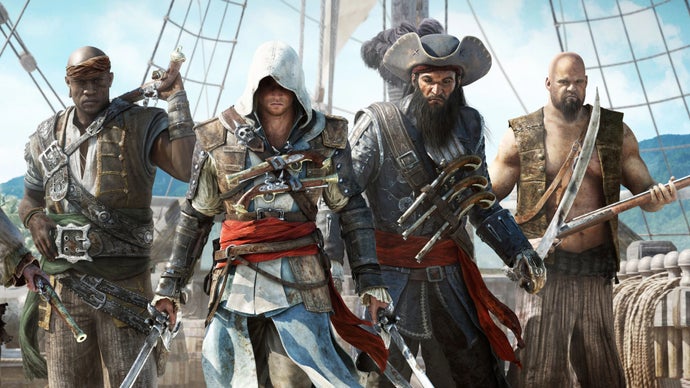
Part of it is Edward Kenway, whose story sits at the intersection of pirate myth and Assassin’s Creed’s long-running themes. The brief facts are what matter here: he is a pirate and an assassin, and the game follows his journey through that world. Even in summary, that dual identity communicates a clear arc. It is easy to understand why players remember it.
And part of it is simply that Black Flag became a reference point inside the franchise. The original game was successful enough to inspire expansions and spin-offs, which further cemented its place in Assassin’s Creed’s internal history. When a title becomes that foundational, returning to it is not just a trip back. It is a way of revisiting what the series once proved it could do.
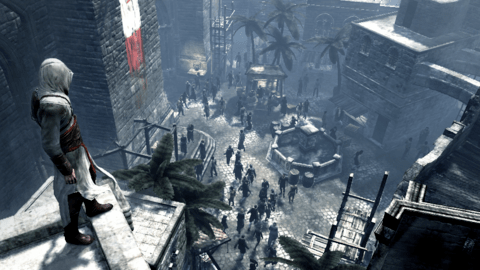
What The Launch Means For Ubisoft and Assassin’s Creed Next
Ubisoft’s stakes are straightforward. Assassin’s Creed is one of its defining properties, and its release strategy matters to the company’s reputation and revenue. A reimagined title that lands this strongly suggests the publisher has found a lever that still works: not merely revisiting the past, but re-presenting it in a way that convinces players it belongs in the present.
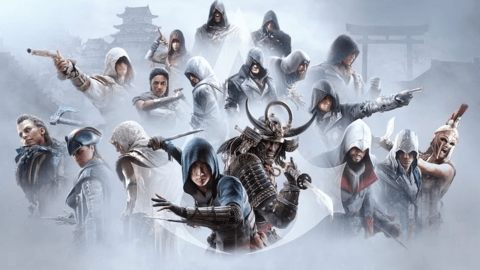
For the broader franchise, the implications are cultural as much as financial. Assassin’s Creed now spans different sub-styles and eras. Some entries lean into sprawling RPG structures. Others are remembered for more focused historical fantasy. The success of Black Flag Resynced may encourage more returns to earlier fan favorites, especially those with distinctive identity.
It also underscores the importance of platform-specific success. Steam is not just a storefront; it is a public arena. When a franchise sets a concurrency record there, it can reshape perception. It can make the series feel ascendant again, even to people who have not played in years.
Black Flag Resynced As a Franchise Stress Test
Players in 2026 have different tolerances than players in 2013. They have broader libraries, deeper backlogs, and endless alternatives. They are also more familiar with re-releases and skeptical of cash-in nostalgia. In that environment, a reimagined game has to justify its existence quickly. The first-day sales figure suggests that Black Flag Resynced cleared that bar for a large audience.
The Steam record adds another layer. It indicates that the game did not simply attract purchases. It attracted attention at scale in a shared time window. That is what franchises want. It is what keeps them culturally present.
None of this automatically guarantees a long tail. Launch heat can cool. But it does change the starting point. It means discussions about the game and about Ubisoft’s strategy begin from a place of demonstrated demand.
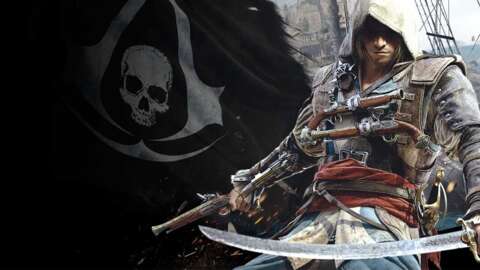
The Pirate Era Still Pulls People In
It is tempting to attribute the surge to a single cause. The safer reading is that multiple forces aligned. The original Black Flag was set during the Golden Age of Piracy, and it offered open-world exploration and naval combat within Assassin’s Creed’s historical framework. Edward Kenway remains a compelling anchor for that fantasy. A reimagined edition that aims to modernize the experience has a clear pitch.
Then the market delivered its verdict quickly. Eurogamer’s report of more than two million copies sold in the first day is the cleanest headline. PC Gamer’s report of a Steam concurrency record is the clearest proof of a crowd.
Near the end of the story, the conclusion becomes simple: Black Flag Resynced did not just return players to a famous chapter of Assassin’s Creed history. It returned the franchise to a kind of launch-day cultural visibility that publishers chase and rarely control.
Whether Ubisoft can sustain that energy is the next question. What is already clear is that the reimagined trip back to 2013 landed like an event in 2026—and the numbers, at least, are not subtle.