

Techno therapy culture is a phrase that keeps resurfacing because it points to something many people recognize instantly: the feeling that a night of electronic music can loosen the knots of a difficult week. It is not a new idea, and it is not confined to any one city. Yet it has taken on new urgency as dance music becomes a lifelong habit for more listeners, and as wellbeing language permeates a wider culture.
Still, a question shadows the trend. Is the healing story just a seductive metaphor, or does it map to something real?
The honest answer begins with a boundary. A rave is not medical care, and a DJ is not a clinician. Nothing on a dance floor should be sold as a substitute for treatment. At the same time, music and movement are not trivial. They are central human tools for regulating emotion, building bonds, and changing attention. Recent research helps explain why electronic music can feel unusually powerful in that mix, and why the experience can be meaningful even when it is not “therapy” in the clinical sense.
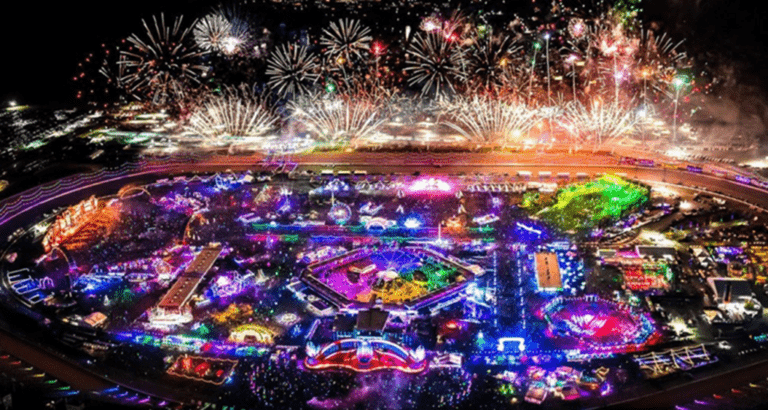
From Detroit and Berlin To A Modern Wellbeing Story
Techno’s modern mythology often starts with the late 1980s and early 1990s, when electronic dance music evolved into a distinct cultural force. Detroit and Berlin appear again and again as reference points. The sound was shaped by innovators including Derrick May and Juan Atkins, among others, and it reflected the socio-political realities around them. That origin story is important because it helps frame techno as more than entertainment. It is music built for altered time, for repetition, and for a shared room.
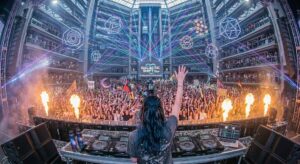
As the genre spread, it splintered into subgenres and scenes. Technology changed production and listening habits. Venues shifted. Promoters refined the architecture of the night: long sets, focused sound systems, and lighting designed to narrow attention. That framework can intensify what people bring with them, whether that is joy, grief, stress, or the need to feel less alone.
The current “therapy” language is partly a cultural translation. It borrows familiar words to describe a hard-to-summarize experience. People are trying to explain why dancing for hours with strangers can feel like an otherworldly experience.

What The Science Can Actually Speak To
The strongest way to treat techno therapy culture seriously is to ask what research can address without overreaching.
One relevant angle comes from neuroscience and the relationship between rhythmic music and the brain. In a 2025 paper in Frontiers in Human Neuroscience, Aparicio-Terrés and colleagues examined neural entrainment to electronic music. They reported that the strength of entrainment correlates with proxies of altered states of consciousness. The study does not claim that electronic music “causes enlightenment” or cures anxiety. It connects measurable features of brain response—entrainment—to indicators related to altered states.
In plain terms, entrainment is about synchronization. A steady beat can pull attention and timing into alignment. Many ravers describe this as “getting locked in” to the groove, or feeling the body move without deliberation. The research does not reduce that experience to a single mechanism. Still, it offers a plausible bridge between the structure of electronic music and the way consciousness can shift during long, rhythmic listening.
A second angle is movement itself. Dance is physical activity, but it also blends music, coordination, memory, and social context. In a 2024 review in Sports Medicine, Yan and colleagues evaluated the effectiveness of dance interventions on psychological and cognitive health outcomes compared with other forms of physical activity. The exact findings and effect sizes depend on the included studies, populations, and outcome measures. What matters for this conversation is the core premise: dance is being assessed in serious health research alongside other kinds of exercise.
OK But Techno Therapy Culture?
That comparison is interesting because ‘rave dancing’ is rarely framed as “exercise” by the people doing it. It is framed as pleasure, catharsis, or community. Yet the body does not care what you call it. Sustained movement can shape mood and cognition. Dance also adds elements that many gym routines do not: music-driven motivation, expressive movement, and social reinforcement.
The third angle is cultural and demographic. A 2025 paper in Psychology of Music by Greasley, O’Grady, and Stapleton focuses on “Persistent participation in Electronic Dance Music by women over 40 years.” This is not as a token nod to diversity, but as evidence that EDM participation is not limited to youth. It is also evidence that people find long-term value in the scene. When a culture is sustained across decades, it is a strong indication that it is meeting needs that go beyond the initial experience.
Put together, these strands do not prove that a techno night is “therapy.” However, they do support the idea that electronic music intersects with attention, emotion, and social connection in ways that are measurable and meaningful.
Why Repetition Can Feel Like Release
Techno is often built from repetition. For newcomers, that can sound mechanical. For fans, it can be liberating. So does the idea of Techno Therapy Culture have more than jsut a beat behind it;
Repetition can reduce decision fatigue. It can simplify the world into a beat, a pulse, a few evolving layers. When people describe “switching off” on the dance floor, they are often describing a shift in cognitive load. The mind stops scanning so many possibilities and starts riding a pattern.
That does not make it escapism in a shallow sense. In stressful periods, a controlled form of absorption can be very restorative. It can also create space for emotion to surface. Many people report that they cry unexpectedly at shows, or feel a sudden wave of gratitude. Others describe a calmer, quieter state the next day.
Research on entrainment and proxies of altered states helps legitimize why these reports are so common. If electronic music can strengthen the experience of being entertained, and entrainment correlates with altered-state proxies, it becomes easier to see why a consistent beat and loud system can change how time and self-awareness are felt.
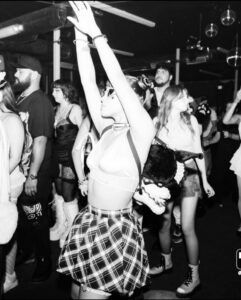
But it is important not to jump from “correlates with proxies” to “guarantees healing.” A dance floor can amplify what you bring. That includes joy, but also anxiety, overwhelm, or grief. The same intensity that feels cleansing to one person can feel destabilizing to another. Which is why there is such a strong sense of looking out for each other in the community at large. It may not always live up to expectations, as recent events have brought to light. However, the dedicated community who make up the majority of the scene adhere to the “care for others and keep an eye on their well being ethos:


The Hidden Ingredient: Other People
The word “therapy” often implies a private exchange. Raves are the opposite. They are public, collective, and full of strangers.
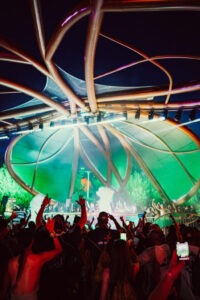
Yet community is a recurring part of why people use therapeutic language. A good night out can provide low-pressure belonging. You do not have to be clever, productive, or explain yourself. You can be in a room with others who share a simple purpose: move together to sound.
This is also where techno’s history matters. Techno emerged in a world shaped by social and political pressures. Scenes built their own codes of safety and mutual respect, to varying degrees. Those codes can include looking out for someone who seems unwell, offering water, or creating space for different identities. The ideal is not always met, and scenes differ widely. But the aspiration helps explain why some participants experience a rave as emotionally supportive.
The Greasley, O’Grady, and Stapleton research on women over 40 persisting in EDM scenes also suggests that community can be durable. People do not keep returning for decades only for the novelty of a kick drum. They return because the culture offers something they cannot easily replace.
Dance As Wellbeing: What Comparisons Can And Can’t Tell Us
The Yan et al. review places dance in the broader category of physical activity. That is useful because it pulls dance out of the “frivolous” box. It also forces clearer questions.
Is dance music uniquely beneficial compared to other exercise, or simply another route to similar outcomes? Does it help mood because it is aerobic movement, because it is music, or because it is social? The truth is likely a combination.
For techno crowds, this suggests a grounded way to talk about benefits. A night that includes sustained dancing is not just a sensory binge. It is also physical exertion, coordination, and often social bonding. Those ingredients are all associated with wellbeing in different bodies of research.
At the same time, raves also carry risks that a standard exercise setting may not. Some nightlife environments involve alcohol or other substances, and those can complicate mental health outcomes. Any honest account of wellbeing has to hold both sides: the potential benefits of movement and community, and the potential harms of overexertion or unsafe conditions.
Aging Into The Scene, And How That Changes The Story
The assumption that electronic dance music is only for the young is outdated. Greasley, O’Grady, and Stapleton’s work underscores that point. Persistent participation changes what “escape” looks like. For a 19-year-old, a rave might be rebellion. For someone in midlife, it might be maintenance. It might be the one place where identity is not reduced to work, caregiving, or achievement.
This is one reason techno therapy culture resonates right now. The culture is no longer a brief phase for many participants. It is becoming a longer arc of adult life. As that happens, people naturally ask what the practice is doing for them. They also get more discerning. They can tell the difference between a night that leaves them energized and connected, and one that leaves them depleted.
The persistence of older participants also pressures promoters and venues to rethink accessibility and care. If scenes want to support long-term participation, they have to consider practical needs. That can mean spaces to rest, clear information, and safer crowd management. Those are not glamorous details, but they influence whether the experience is restorative or draining.
Where The “Therapy” Metaphor Becomes Dangerous
The lure of the phrase is obvious. It sounds modern and compassionate. It can also sell tickets.
The danger is not in people privately saying a set “saved” them in a rough month. The danger is in institutions using therapy language as cover. A venue is not necessarily safer because it uses wellbeing rhetoric. An event is not more ethical because it advertises “healing frequencies.” Without concrete practices, the language is empty.
There is also a personal risk. If someone uses dance nights as their only coping tool, it can become a fragile system. When the music stops, the underlying issue remains. That is not a reason to dismiss the dance floor. It is a reason to place it properly: as one meaningful support among many, not as a cure.
A research-informed view helps here. The Aparicio-Terrés et al. findings about entrainment and altered-state proxies can explain why a night can feel profound. The review suggests why dance can connect to psychological outcomes. The Greasley, O’Grady, and Stapleton paper shows that participation can be persistent and significant across age. None of them are trying to justify grand claims.
Techno Therapy Culture, Reframed As A Practice Of Attention
If there is a responsible way to keep the phrase, it is to treat it as cultural shorthand. It describes a practice that combines three elements: rhythmic sound, sustained movement, and collective presence.
Rhythmic sound can narrow and organize attention. Sustained movement can shift mood and bodily state. Collective presence can soften isolation. Those effects are not guaranteed, and they are not evenly distributed. But they are coherent.
This reframing also respects techno’s history. The genre did not arise as a wellness product. It emerged as an artistic and social response to specific times and places. Its power has always been tied to context: the room, the system, the crowd, and the willingness to surrender to the music.
Near the end of the night, when the lights come up and people step outside, the world tends to rush back in. Work, conflict, news, obligations. The question is what, if anything, comes back with you.
For many, what comes back is not a miracle cure. It is a small but real shift: a calmer nervous system, a sense of connection, a memory of being held by sound. That is not the same as therapy, but it is not nothing either. And it is why techno therapy culture continues to feel like more than a slogan, even under sober scrutiny.