
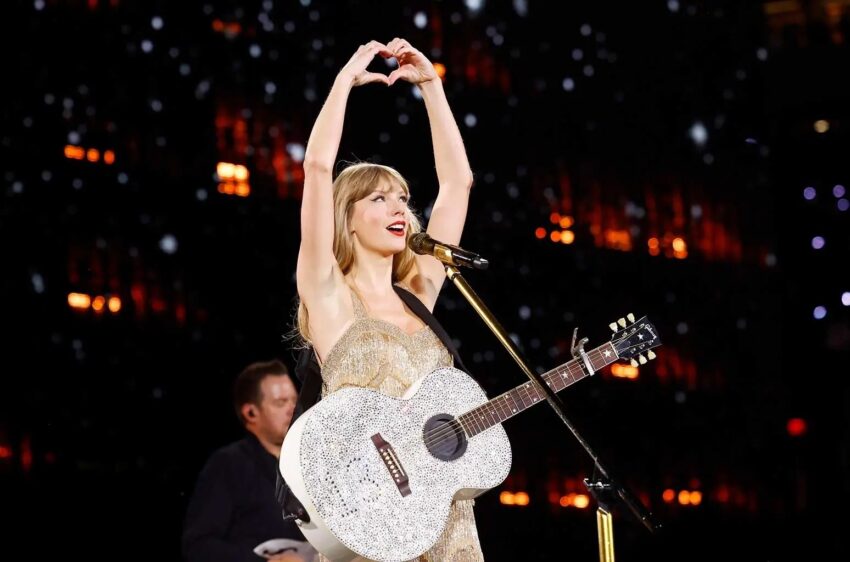
Taylor Swift for Country Music Hall of Fame
Country Music Hall of Fame speculation is heating up, and Vince Gill just poured gasoline on the fire. The 22-time Grammy winner, inducted at 50 and once wary it came “a little early,” now champions Taylor Swift as a worthy future honoree. His stance reflects Nashville’s evolving canon, where pop crossover and country lineage increasingly coexist.
Gill’s Perspective
On Rolling Stone’s Nashville Now podcast, Gill revisited his 2007 induction with candid humility. He feared the accolade might precede the work. Then he doubled down on craft, aiming to “earn it.” The stats say he did: 63 Hot Country Songs entries, five No. 1s, and 16 albums on the Billboard 200. As he rolls out his EP series, 50 Years From Home, Gill’s gaze is fixed on the next generation’s standard-bearer.
Eligibility Window
Swift’s debut album arrived in 2006, led by the breakthrough “Tim McGraw.” By the Hall’s Modern Era criteria—“20-plus years since national prominence”—2026 is a hard marker, though some argue 2006 already qualifies depending on how “national prominence” is interpreted. Either way, the runway has begun. Country Music Hall of Fame as a phrase is not just ceremonial; it anchors identity, economics, and the story Nashville tells about itself.






Crossover Legacy
Gill’s confidence is unequivocal: “I think they’ll put her in there. Why wouldn’t you?” He notes Swift is among the Hall’s biggest donors, a reminder that institutions are shaped by both influence and investment. Her country origins, pop omnipresence, and roots-minded storytelling trace a modern arc once charted by Johnny Cash and Eddy Arnold, both inducted at 48. Swift, now 36, would become the youngest inductee if chosen soon, reframing the pace of recognition.
Defining Greatness
This debate is bigger than a plaque. It spotlights how Nashville elevates artists who bridge formats without abandoning the songwriting discipline that defines the town. Swift’s early radio rise, diaristic craft, and boundary-pushing reinventions have already redrawn the commercial map. Gill’s endorsement is more than goodwill; it is a veteran’s read on legacy in real time. And it places Country Music Hall of Fame debates squarely at the center of today’s music conversation.
What Comes Next
Whether eligibility lands this year or in a near horizon, the question is no longer if, but when. The Hall thrives on narratives of continuity, and Swift’s career threads country tradition through pop spectacle with uncommon precision. As Gill keeps earning his honor decades on, Swift advances toward hers—proof that Nashville’s story expands while holding fast to its roots. Country Music Hall of Fame discussions will keep pulsing as the timeline tightens, and the canon updates for a new era.